
Individualized Pricing
The holy grail of pricing strategy if you ask us
We're always on the hunt for novel ideas in the world of pricing. That's why we're excited to dive into the concept of individualized pricing, or as some experts call it, "the higher art of power pricing." Imagine being able to charge each customer exactly what they're willing to pay, based on the value they perceive in your offering. We certainly think it’s a neat idea - after all, that’s why we built Price Theory in the first place.
In a fascinating article by Hermann Simon and Stephan A. Butscher (of the esteemed pricing consultancy Simon, Kucher and Partners) the authors explore how companies can move beyond one-size-fits-all pricing to capture more value and boost profitability. They argue that while many businesses have embraced product customization, there's an even greater opportunity in customizing prices. For those of us in the software world, where pricing can make or break a company's success, these ideas are more than just interesting – they're potentially game-changing.
The Core Concept
The article "Individualised Pricing: Boosting Profitability with the Higher Art of Power Pricing" by Hermann Simon and Stephan A. Butscher explores the concept of price customization as a strategy to increase profitability in businesses. While many companies have embraced product and service customization, the authors argue that customized pricing offers even greater potential for profit enhancement.
The core idea behind price customization is simple yet powerful: charge each customer based on the individual value they place on a product or service. However, implementing this strategy can be challenging, as it's often impossible to determine the exact value perception for every single customer. To overcome this hurdle, businesses need to segment their customers according to their value perceptions and create barriers between these segments to prevent higher-value customers from taking advantage of lower prices intended for other segments.
The authors state, "As we have pointed out in these examples, implementation of price customisation can yield significant gains in profit — not 2 or 5 per cent, but rather 10 or 40 per cent —, so it is well worth investigating."
Visualizing Profit Potential
The authors illustrate the potential profit gains of price customization with a compelling visual representation:
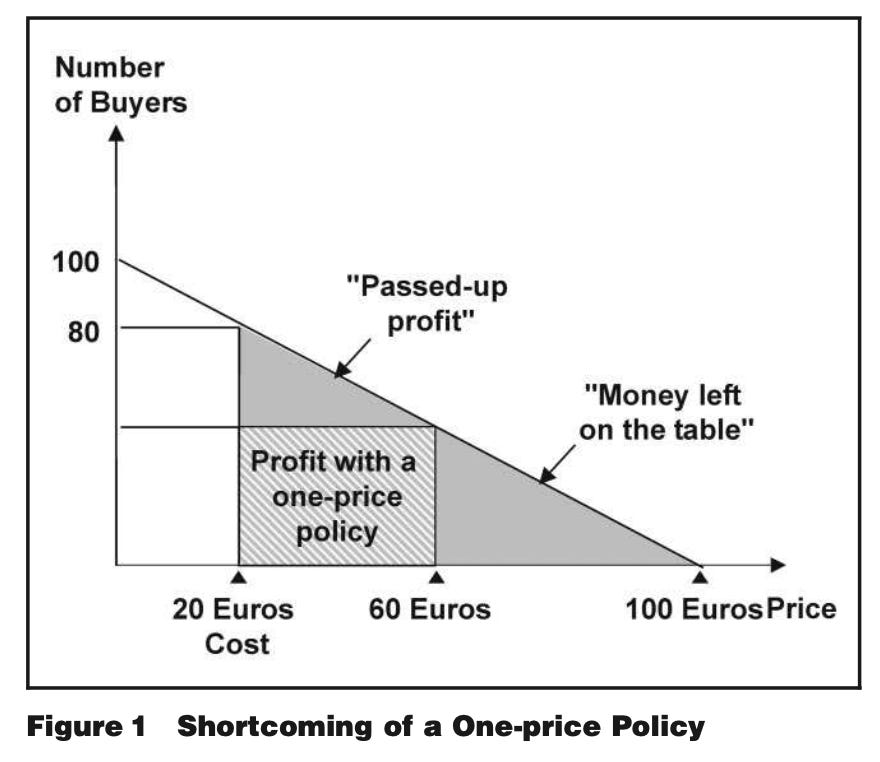
This graph demonstrates how a one-price policy leaves significant profit potential untapped. The large shaded triangle represents the total possible profit if each customer paid their maximum willingness-to-pay. However, with a single price (in this example, €60), the company only captures the profit represented by the hatched rectangle. This leaves two areas of untapped profit: the "money left on the table" from customers who would have paid more, and the "passed-up profit" from potential customers who value the product above cost but below the set price.
Five Innovative Pricing Techniques
The authors present five innovative techniques for implementing price customization:
Multi-dimensional pricing
Multi-person pricing
Price bundling
Multi-product strategies
Auctions and Dutch auctions
We would consider these all “advanced tactics,” and generally we’re recommend simple pricing. But as pricing nerds we still think they’re pretty neat, so let's explore each of these strategies in more detail.
Multi-dimensional Pricing
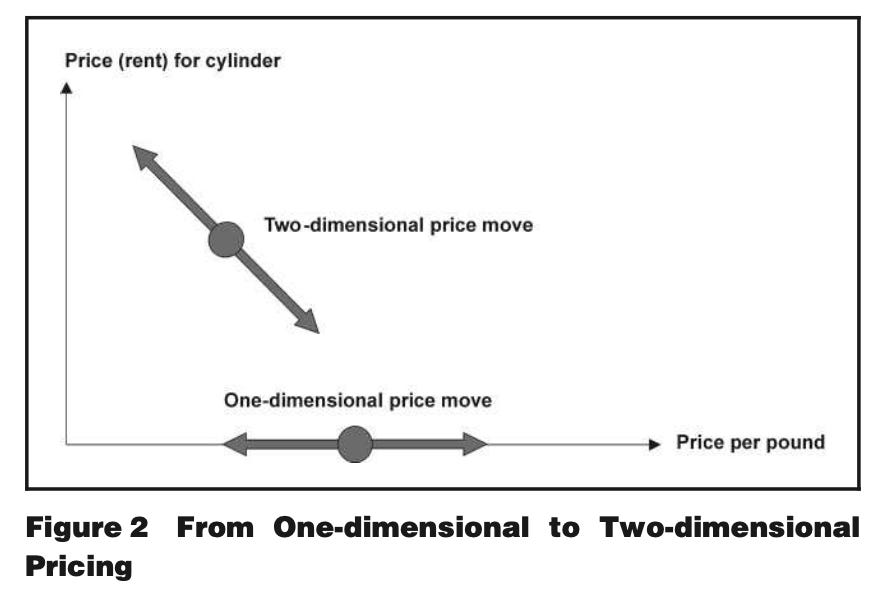
Multi-dimensional pricing involves using two or more price parameters instead of just one. The authors provide an example from the industrial gas industry, where a supplier introduced a two-dimensional pricing scheme: a rental fee for the steel cylinder and a reduced per-pound price for the gas itself. This approach allowed the company to charge different effective prices based on customers' consumption rates, resulting in a 25% profit increase.
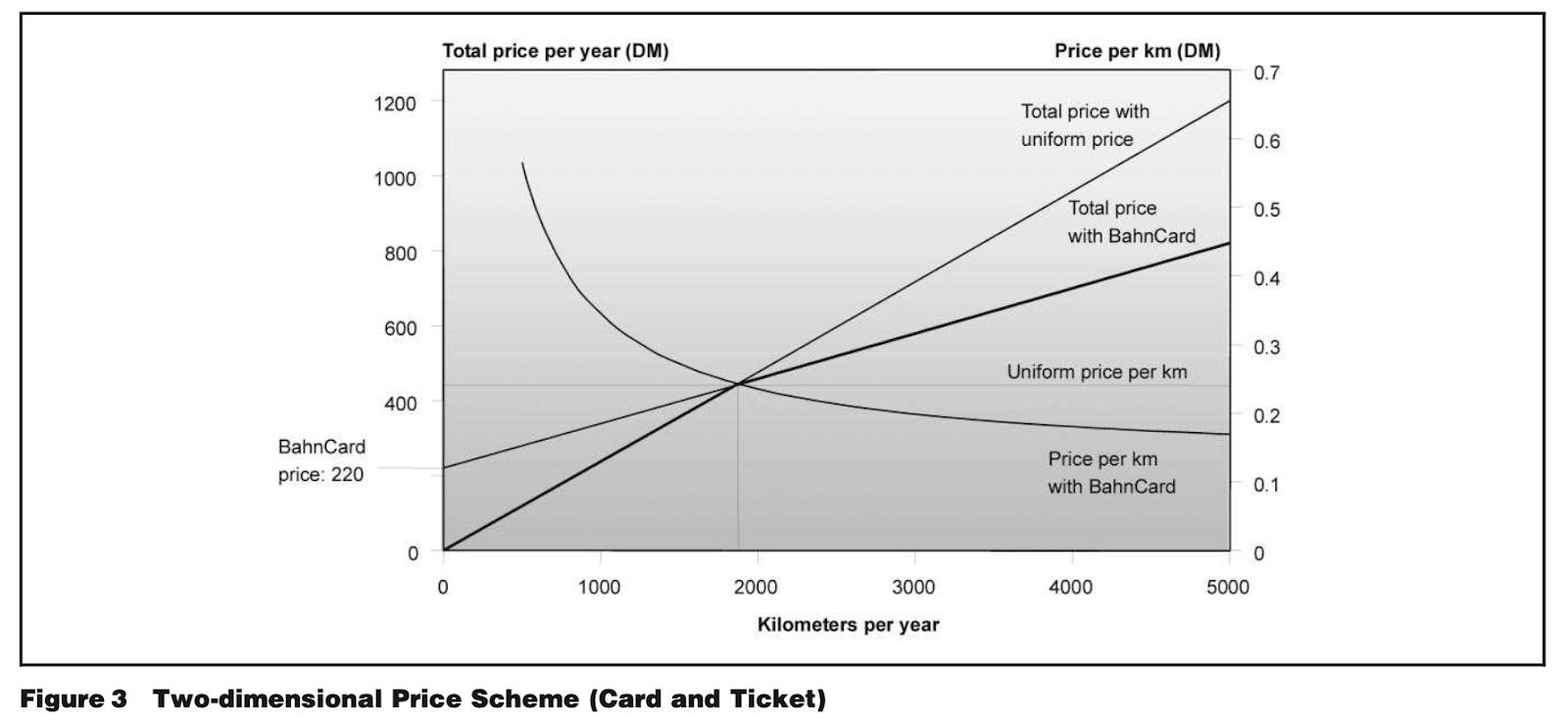
Another successful example of multi-dimensional pricing is the German Railroad Corp.'s introduction of the BahnCard. This yearly card allows holders to purchase train tickets at a 50% discount, creating a two-dimensional price structure: the card price and the discounted ticket price. This strategy not only increased profitability but also attracted more frequent travelers, the company's most profitable customer segment.
Multi-person Pricing
Multi-person pricing is designed for customer groups of two or more people. In this approach, only the first customer pays the full price, while others receive discounts. This strategy recognizes that the willingness-to-pay may vary within a group. The authors provide an example of a business traveler and their spouse, showing how multi-person pricing can increase overall contribution compared to a single-price strategy. This approach is particularly popular in the travel, tourism, hotel, conference, and sports industries, typically yielding profit improvements of 10-15%.
Price Bundling
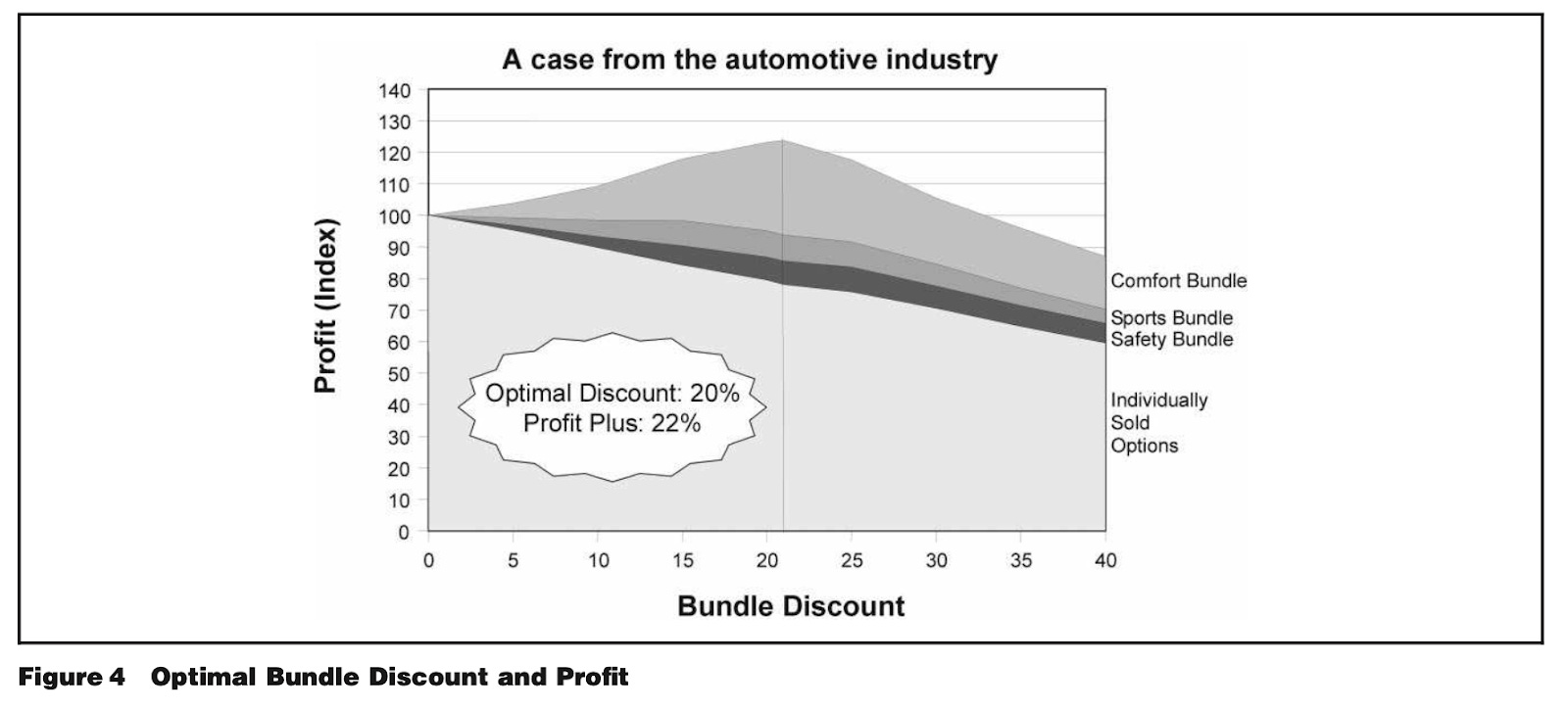
Price bundling involves selling two or more products together at a price lower than the sum of their individual prices. This strategy can be implemented as pure bundling (only the bundle is sold) or mixed bundling (individual products are also sold separately). The authors present a case study from the automotive industry, where offering three package options (comfort, sports, and safety) at a 21% discount yielded a 22% profit increase.
Multi-product Strategies
Multi-product strategies involve introducing less expensive alternatives (LEAs) to protect premium brands and expand into new segments. This approach is particularly useful when facing competition from low-priced "no-name" products or private labels. The authors emphasize the importance of carefully designing and pricing the LEA to limit cannibalization of the premium brand while gaining market share from price aggressors.
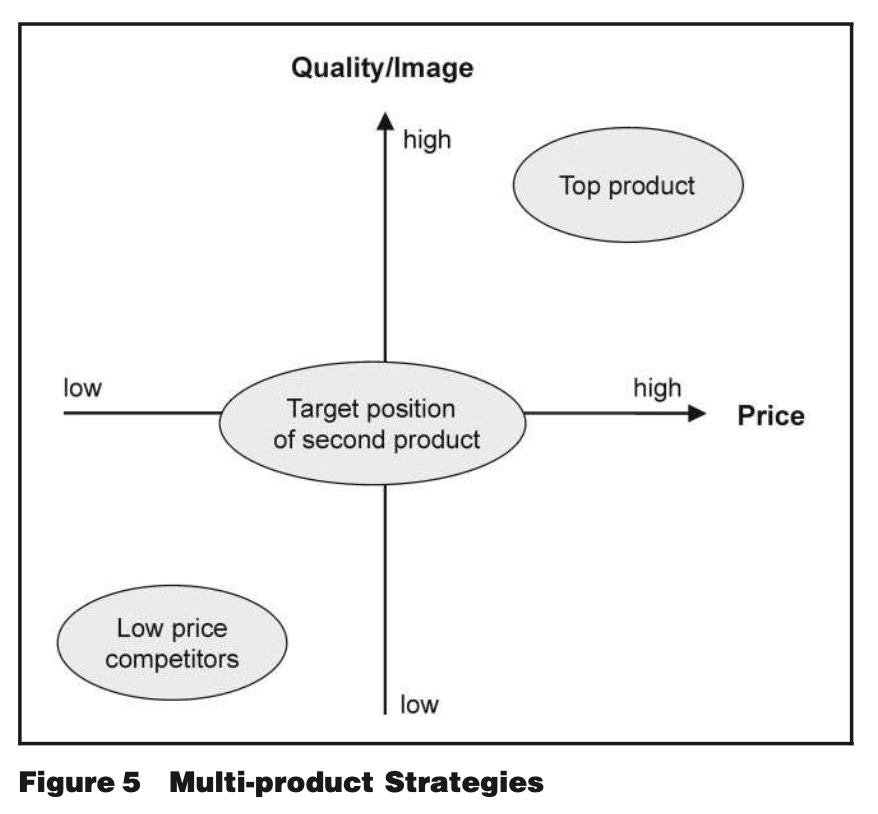
A real-world example illustrates the success of this strategy: a leading lighting products manufacturer introduced an LEA to combat cheap imports from China. The LEA was priced 40% lower than the premium brand, with lower quality and different design, packaging, and distribution channels. After two years, this strategy resulted in a 17% market share increase and a 45% profit increase.
Auctions and Dutch Auctions
Auctions and Dutch auctions have gained popularity with the growth of the Internet, allowing for large-scale customer-driven pricing models. These methods come closest to the ideal situation where every customer pays their maximum willingness-to-pay. In a traditional auction, interested parties bid on a product, with the highest bidder typically winning. Dutch auctions start with a high price that gradually decreases until a buyer signals their willingness to purchase at the current price.
Implementation Considerations
The authors note that effective implementation of price customization requires detailed information on customer value perceptions, price elasticities, product cost structures, logistics impacts, and organizational considerations. They recommend using techniques such as conjoint measurement and decision support models to gather necessary data and simulate the effects of different pricing strategies.
Our 2 Cents
Individualized pricing represents a powerful shift in how B2B companies can approach their pricing strategies. By moving away from one-size-fits-all models, or even simple price tiers, businesses can more accurately capture the true value they provide to each customer segment. This approach not only has the potential to significantly boost profitability but also allows for greater flexibility in addressing diverse customer needs.
In the B2B SaaS world, where product value can vary dramatically based on factors like company size, industry, and specific use cases, individualized pricing opens up new possibilities for aligning price with value. This alignment can lead to improved customer satisfaction, reduced friction in the sales process, and ultimately, stronger, more sustainable customer relationships.
It was this recognition of the transformative potential of individualized pricing that led us to create Price Theory. By providing tools and insights to segment customers, analyze willingness-to-pay, and implement multi-dimensional pricing models, we aim to empower businesses to unlock the full potential of their pricing. Individualized pricing shouldn’t be a nice-to-have, but a critical competency for B2B SaaS companies looking to thrive in the long term. One size fits none—but individualized pricing fits all.
Source:
Simon, H., & Butscher, S. A. (2001). Individualised Pricing: Boosting Profitability with the Higher Art of Power Pricing. European Management Journal, 19(2), 109-114.